Preparedness services for your organization
Work with Leeward on a specific project or a defined set of ongoing priorities. We help your organization understand its risks, prepare staff for their responsibilities, test its response, and follow through on improvements. Each proposal identifies the work and deliverables included.
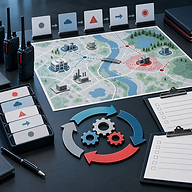
Planning and Program Reviews
Understand your risks and decide what needs attention. We develop and update emergency operations and continuity plans, review existing programs, and turn findings into practical priorities for your team.
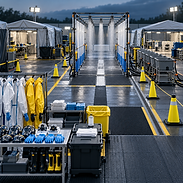
Training and Team Development
Prepare staff for their emergency responsibilities. Training can incorporate your procedures, equipment, and operating conditions so people can practice the tasks and decisions expected of them.
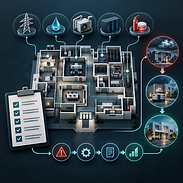
Exercises and Improvement Planning
Practice your response and find where coordination needs work. We design and support drills, tabletop discussions, and operational exercises, then document findings and help establish improvement actions.
Capabilities in Detail
Ongoing Preparedness Support
Keep preparedness work moving throughout the year. We help your program lead establish priorities, maintain an activity schedule, review selected documents, prepare training or exercises, and track agreed improvement actions.
Continuing support can include an agreed work plan, scheduled working sessions, defined document reviews or updates, and a record of progress and unresolved decisions. The agreement establishes the duration, availability, responsibilities, and included work. Additional assignments can be scoped as priorities change.

Planning and Program Reviews
Build a plan your team can use
Build a usable plan or determine how an existing program needs to change. We help connect emergency arrangements with how your organization operates and the resources it can call on.
When to bring us in: You are developing a new plan, updating an older one, taking over a program, or responding to findings from an incident, exercise, or internal review.
The work: Review selected documents and meet with responsible staff. Identify hazards, critical functions, dependencies, decision points, and assigned responsibilities. Develop or revise the plans and procedures included in the project.
What you receive: Depending on scope, a findings summary, a new or revised plan, supporting checklists or procedures, a prioritized improvement list, and a discussion of the recommended next steps.
Common projects: Emergency operations plans, hazard vulnerability assessments, continuity plans, preparedness program reviews, and supporting procedures.

Training and Team Development
Prepare people for their responsibilities
Prepare staff to perform the work your emergency plans assign to them. We agree on learning objectives, content, and practical activities to fit the responsibilities of your staff. Facility procedures and equipment can be incorporated into the agreed training.
When to bring us in: A team is forming, responsibilities have changed, equipment or procedures need practice, or staff need a refresher before an exercise.
The work: Define learning objectives with your team, develop the training, and deliver instruction and practice appropriate to the task. Use feedback and observation to identify where additional work is needed.
What you receive: Depending on scope, a training agenda, instructional and participant materials, facilitated practice, attendance documentation, and a summary of observations and follow-up needs.
Common projects: Hospital response team development, healthcare first-receiver and decontamination training, nursing facility evacuation, and incident command training.
Exercises and Improvement Planning
Practice, evaluate, and improve
Give your team a structured opportunity to practice decisions, coordination, and response procedures. We design the exercise around the capabilities you want to examine and the people who need to participate.
When to bring us in: You need to examine a plan, practice a particular task, work through a regional response, or prepare an exercise and its supporting materials.
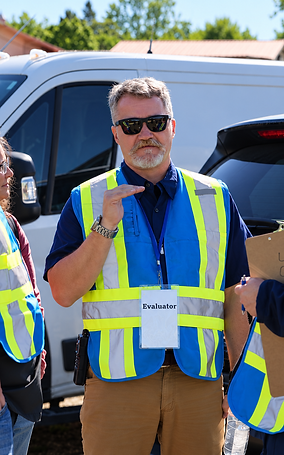
The work: Agree on objectives, develop the scenario and exercise materials, and support planning meetings, facilitation, control, or evaluation. Gather observations, review findings with your team, and develop improvement actions.
What you receive: Depending on scope, an exercise plan or discussion guide, scenario materials, controller and evaluator tools, an after-action report, and an improvement plan with proposed responsibilities and target dates for your approval.
Common projects: Tabletop and functional exercises, decontamination and evacuation drills, healthcare coalition surge exercises, and after-action review support.
Support can cover the complete exercise process or a defined part of an exercise your organization is already developing.
Specialized Preparedness Support
The following areas can be addressed through planning, training, exercises, or a combined project. Tell us the capability you need to develop and the people who will be responsible for it.
Healthcare decontamination readiness
Prepare hospital staff to receive and decontaminate patients who may have been exposed to hazardous materials. Work can address team responsibilities, protective equipment, setup, patient flow, staff instructions, and practice with the equipment available at your facility.
Nursing facility evacuation and sheltering
Help leaders and staff work through evacuation and sheltering responsibilities, resident support needs, communications, transportation coordination, and arrangements with receiving facilities. Training and exercises can be shaped around the facility and the roles of its personnel.
Healthcare coalition coordination and patient movement
Help healthcare and response partners examine communications, available capacity, transportation dependencies, and coordination during surge or evacuation. Exercises can explore how those arrangements work across organizations.
Mass fatality preparedness
Support planning, training, and exercises that clarify agency responsibilities, information flow, documentation, and coordination for dignified operations during a mass fatality incident.
Business continuity and operational disruption
Identify the functions your organization needs to maintain or restore, the resources they depend on, and the alternatives available when normal operations are interrupted. Planning can address staffing, utilities, facilities, communications, records, and critical vendors.
Work example: Hospital decontamination exercise review
Following a hospital decontamination drill, Leeward Solutions prepared an after-action report and a proposed improvement plan. The report brought together exercise observations, documented strengths, and recommended follow-up actions. It gave the hospital a structured basis for validating findings and assigning responsibilities and target dates.
Start with the work you need
A single project can address an immediate need. Continuing support can help your organization maintain the program and work through longer-term priorities. We will discuss the arrangement that fits the work and the capacity of your team.